
Memory Held in Clay
A QUIET ENCOUNTER
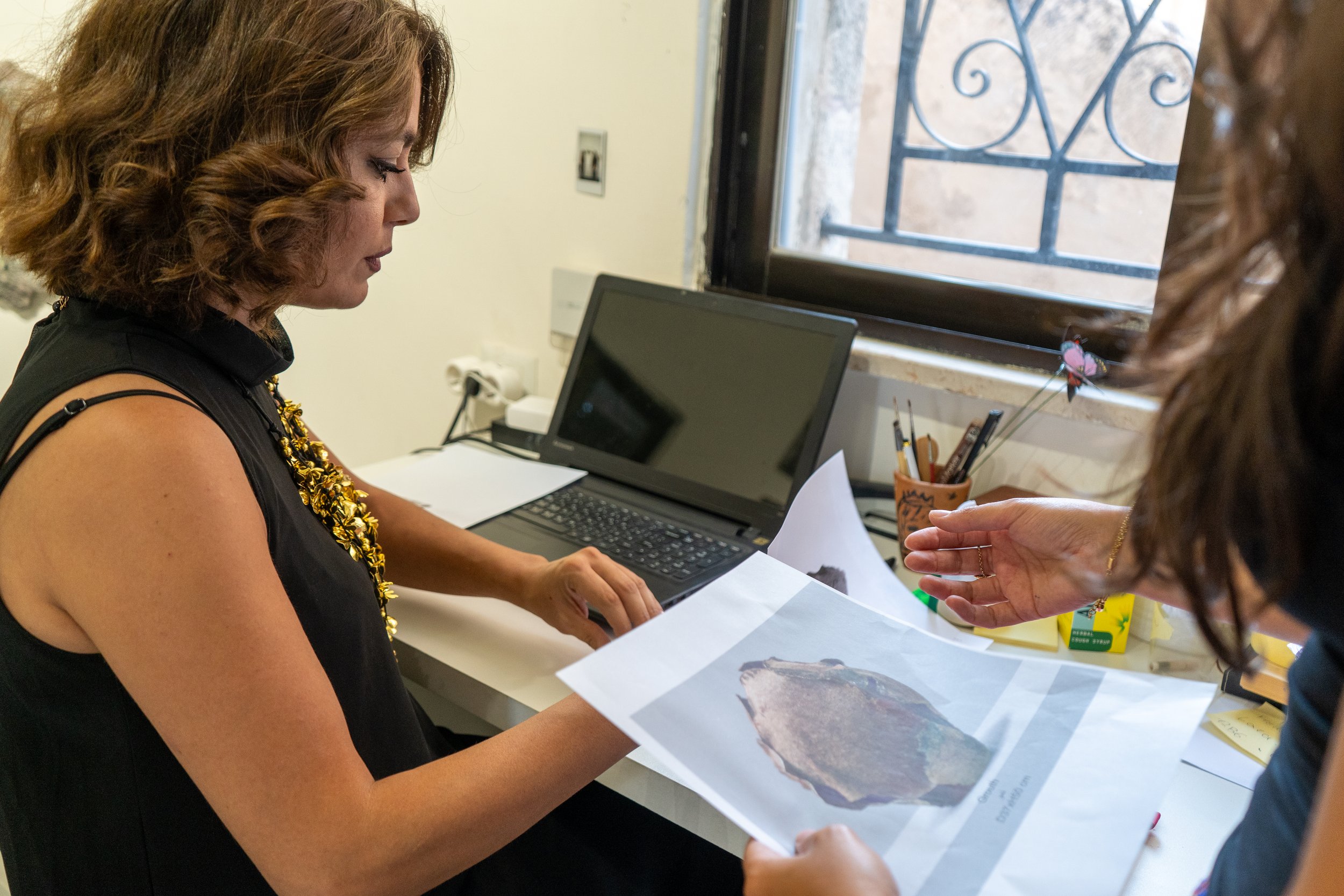
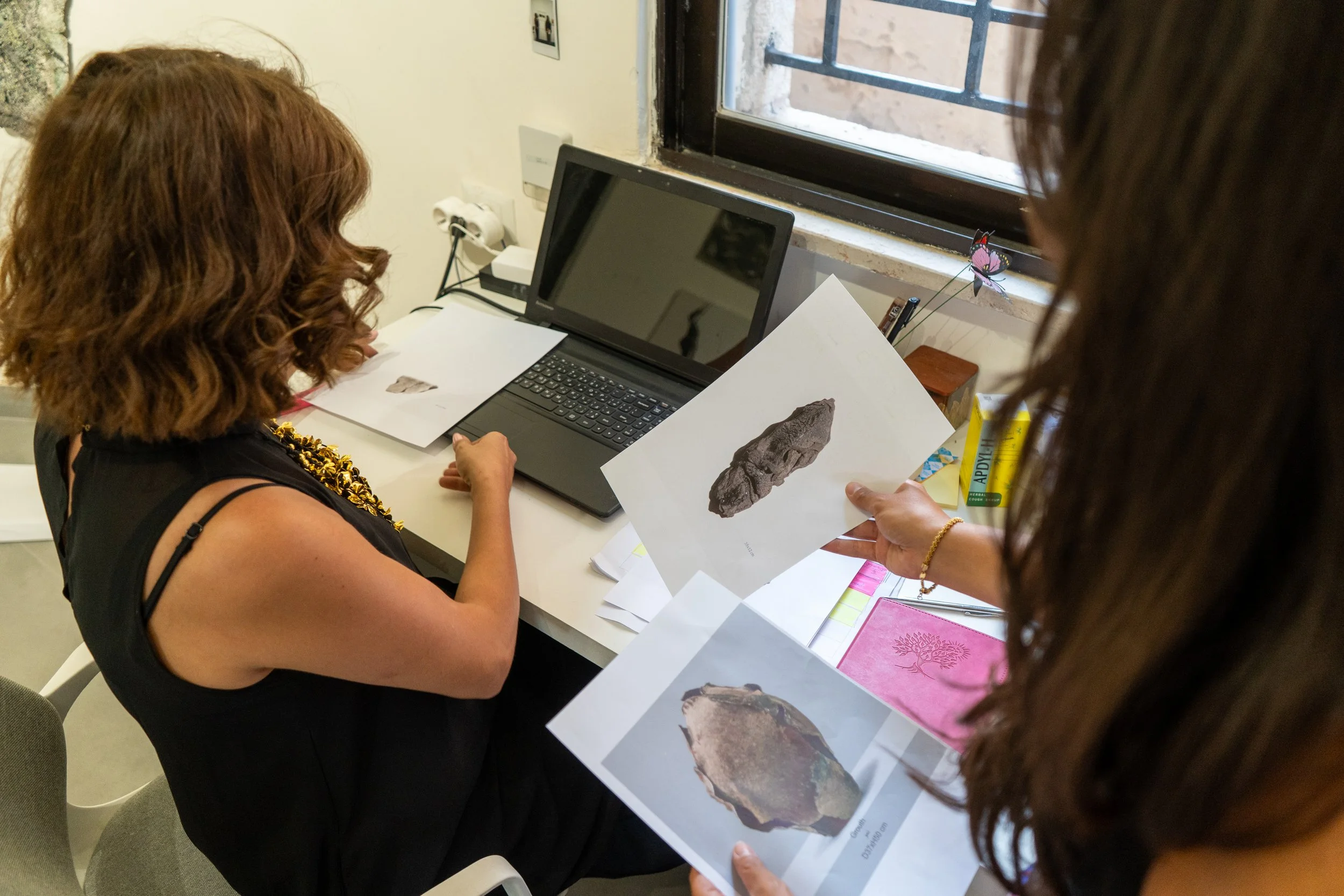
Ahead of Khuzama Abu Joudeh's upcoming exhibition, When Clay Becomes Figures, I paid her a visit for a short media feature and interview — a look at the work before the doors open to anyone else.
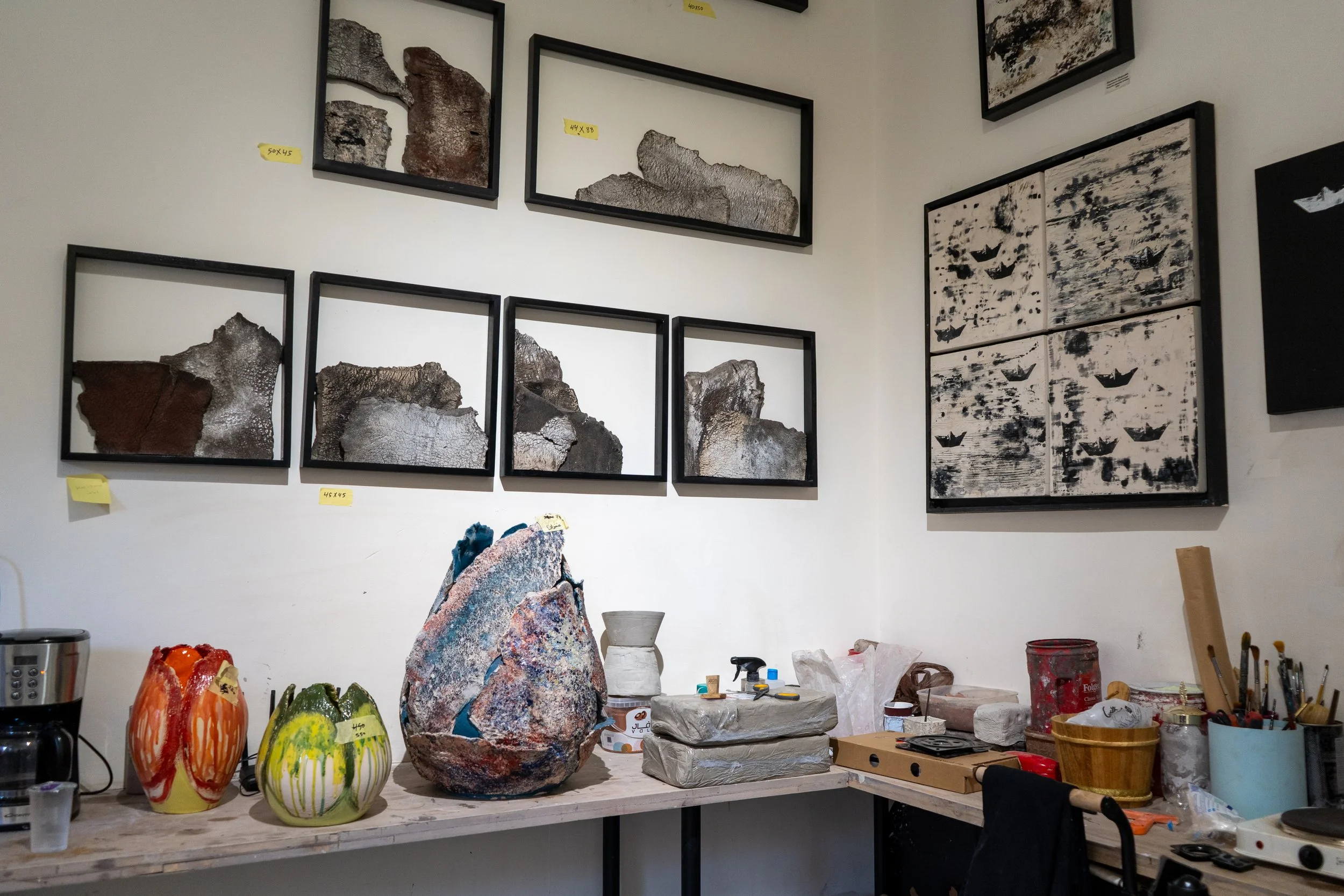
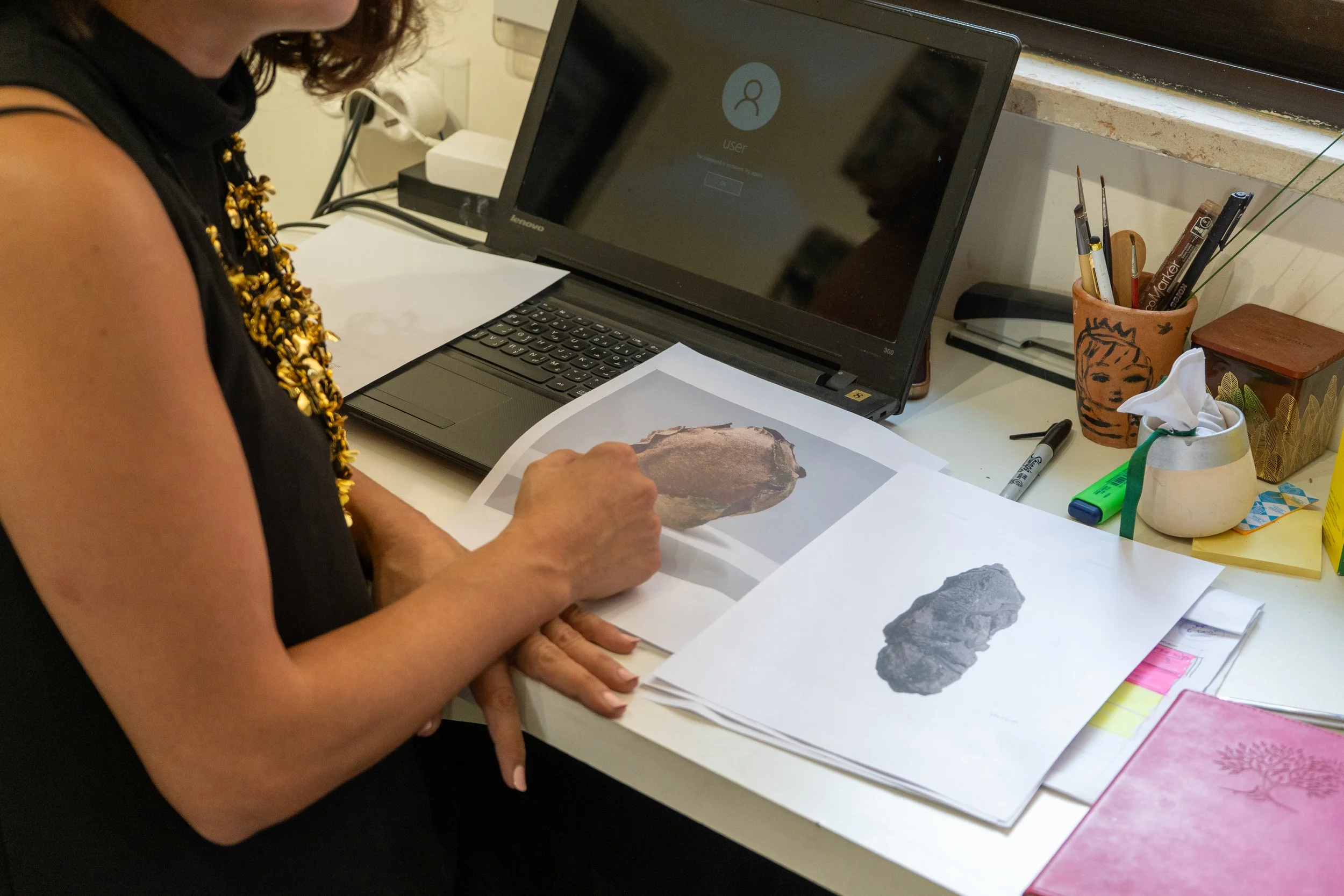
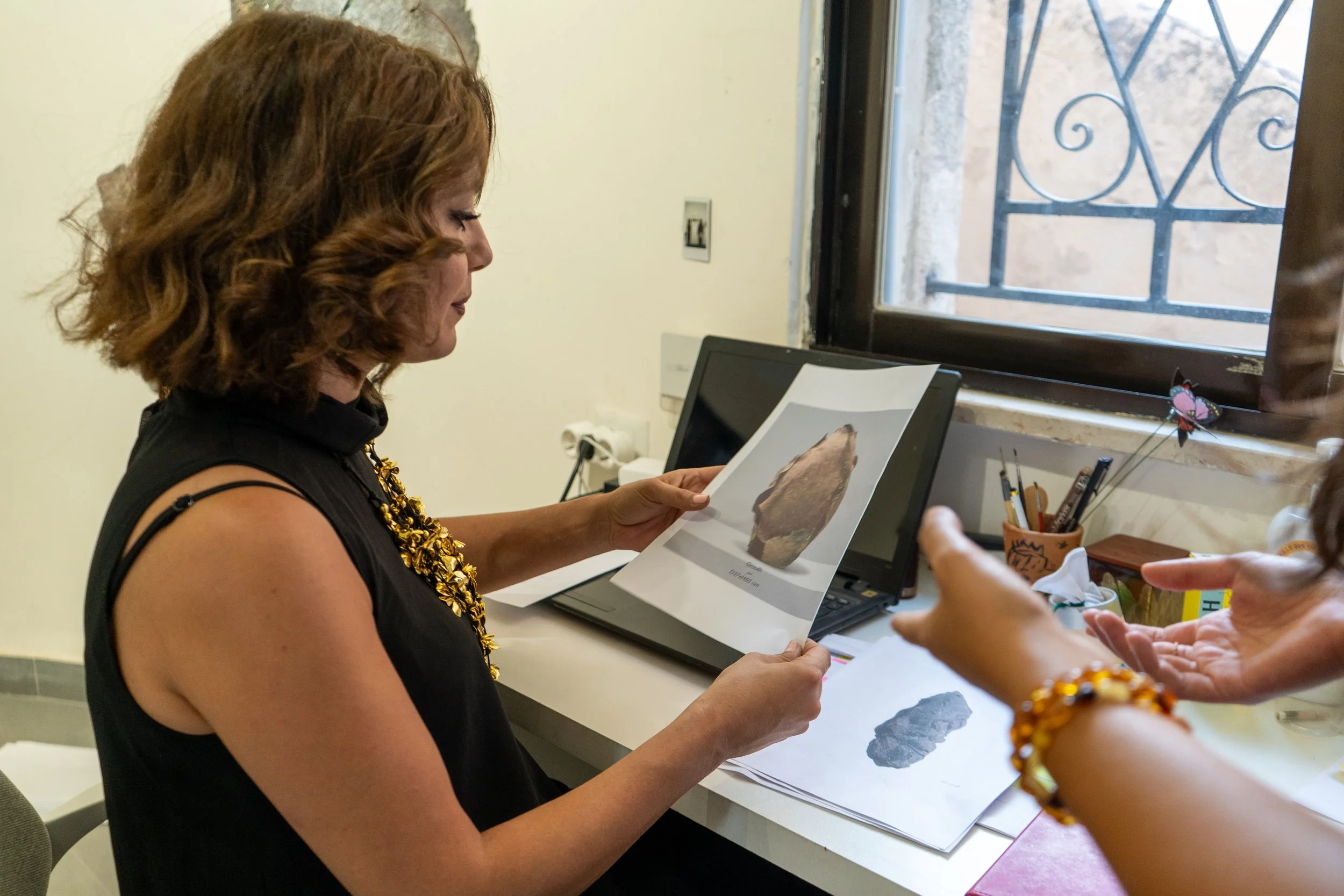
The studio was calm the moment I walked in. Sketches on the desk, works still in progress, sculptures standing quietly around the room. Khuzama's name means lavender in Arabic, and her work carries that same quiet — though underneath it, a lot is happening.
WHEN CLAY TAKES FORM
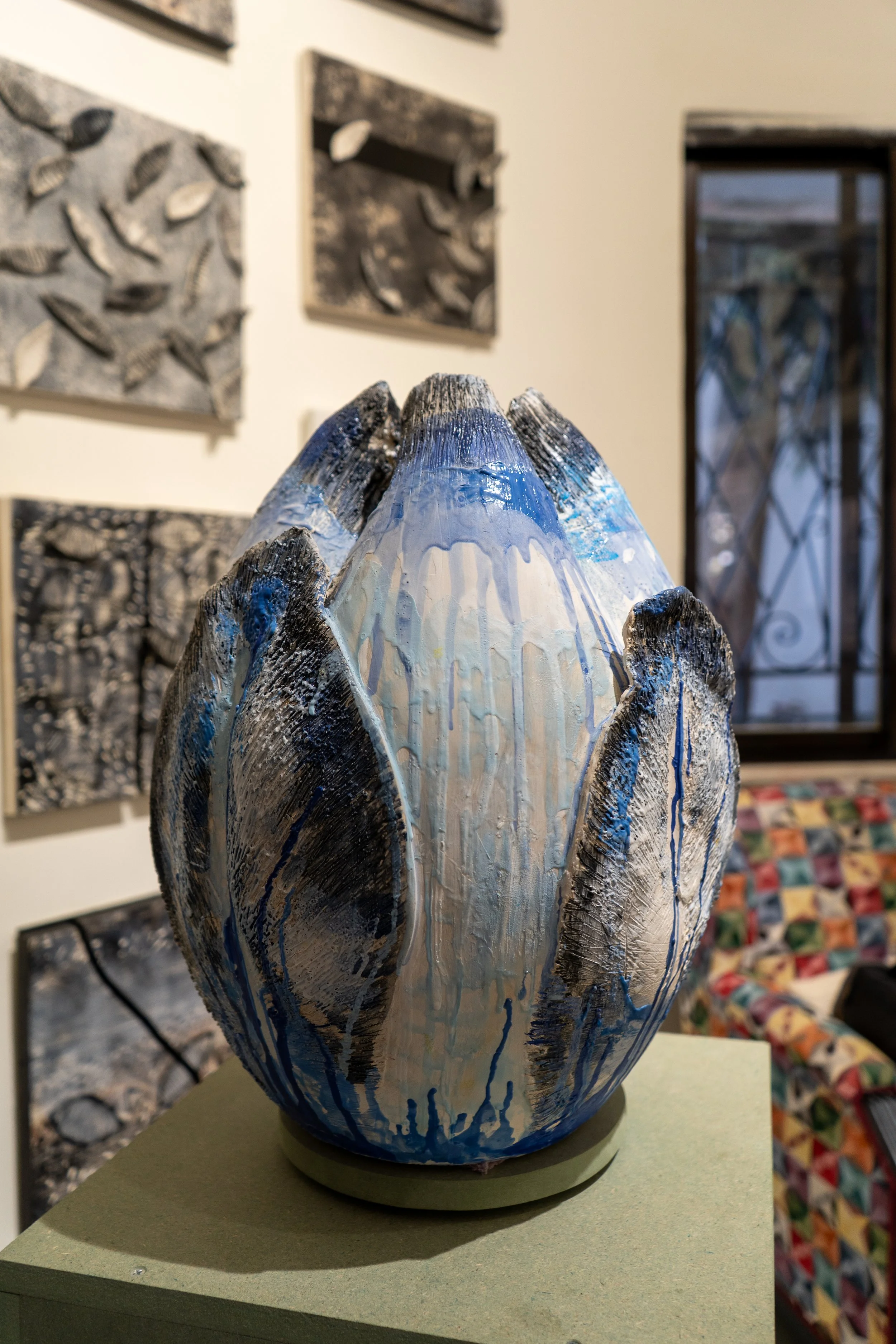
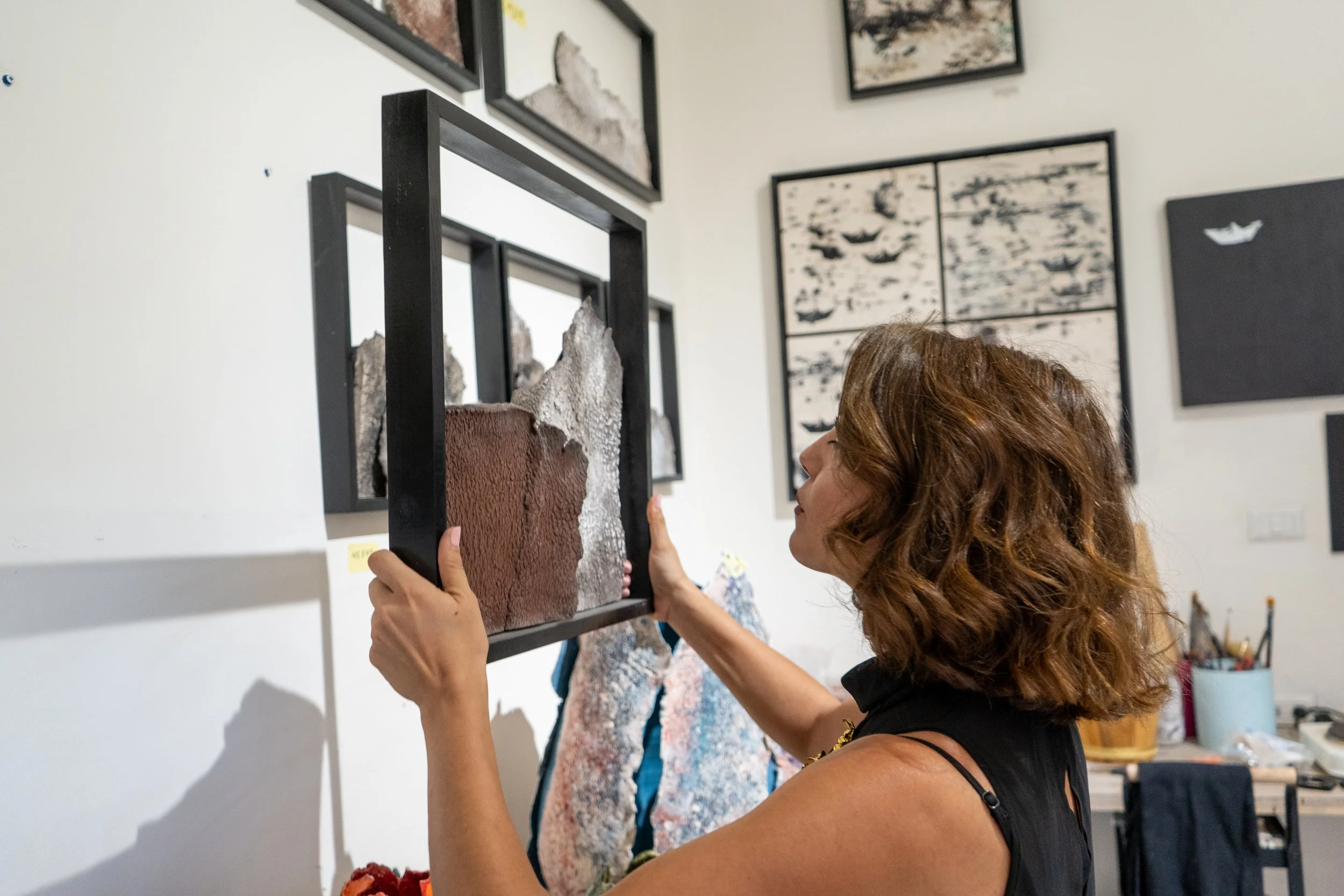
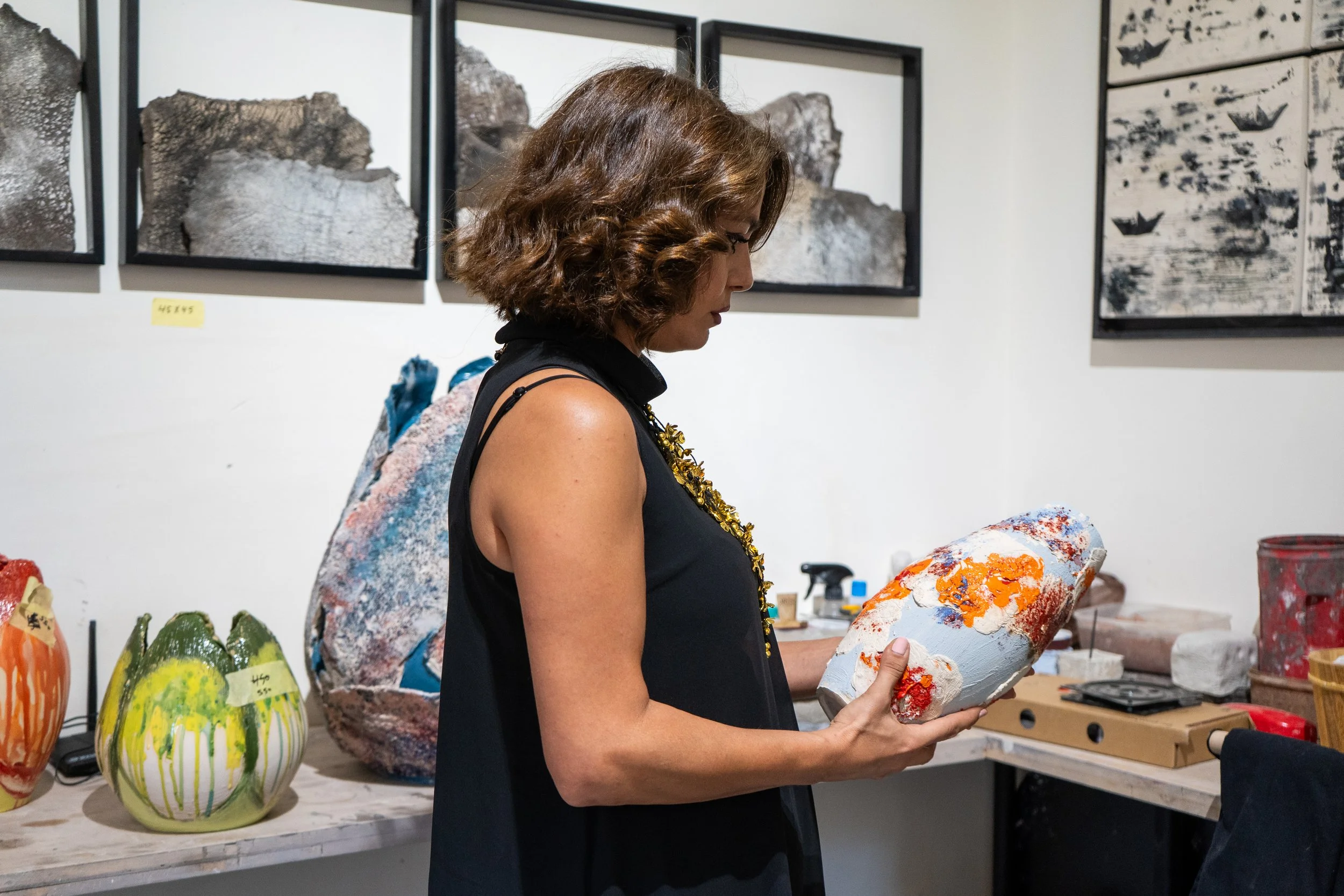
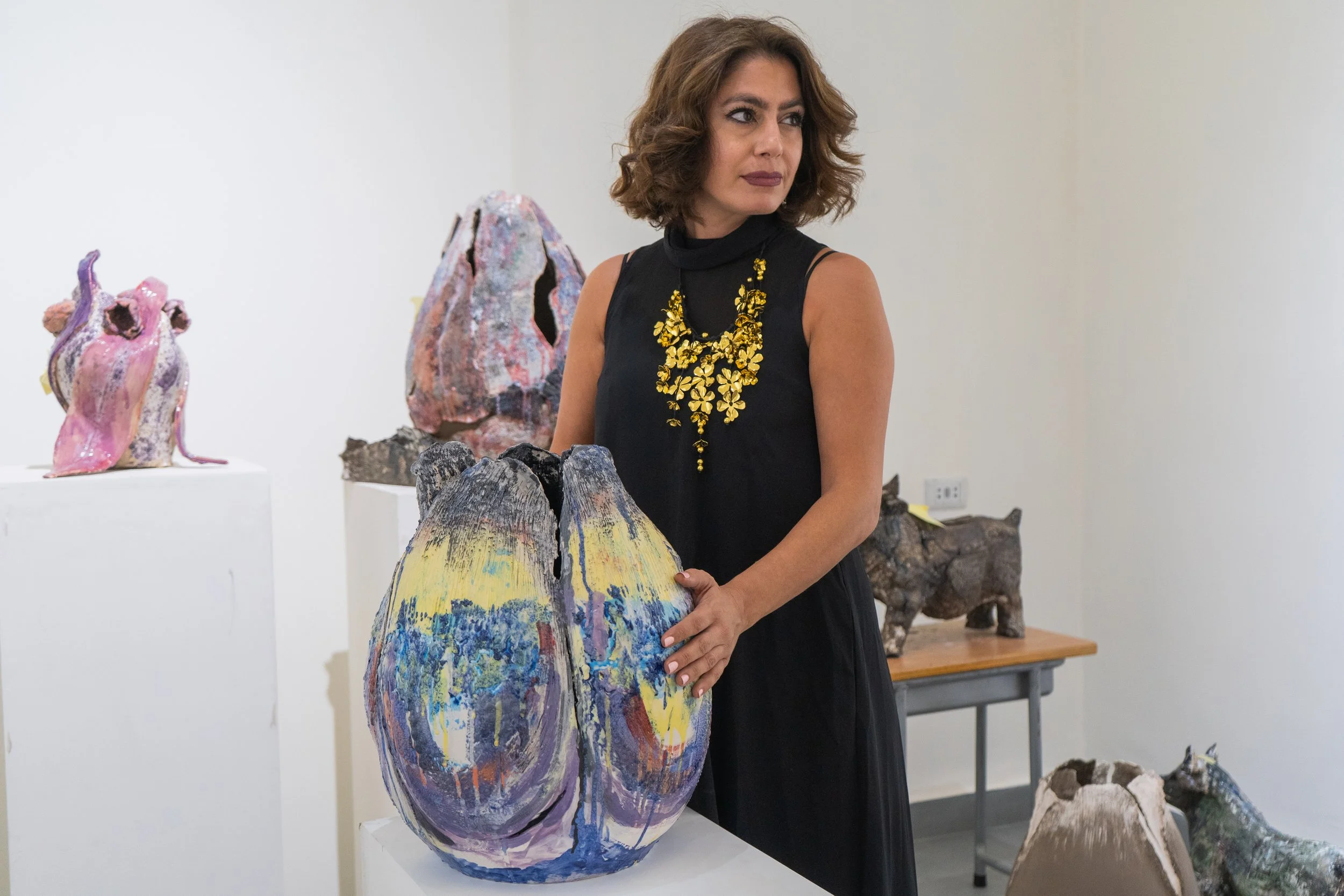
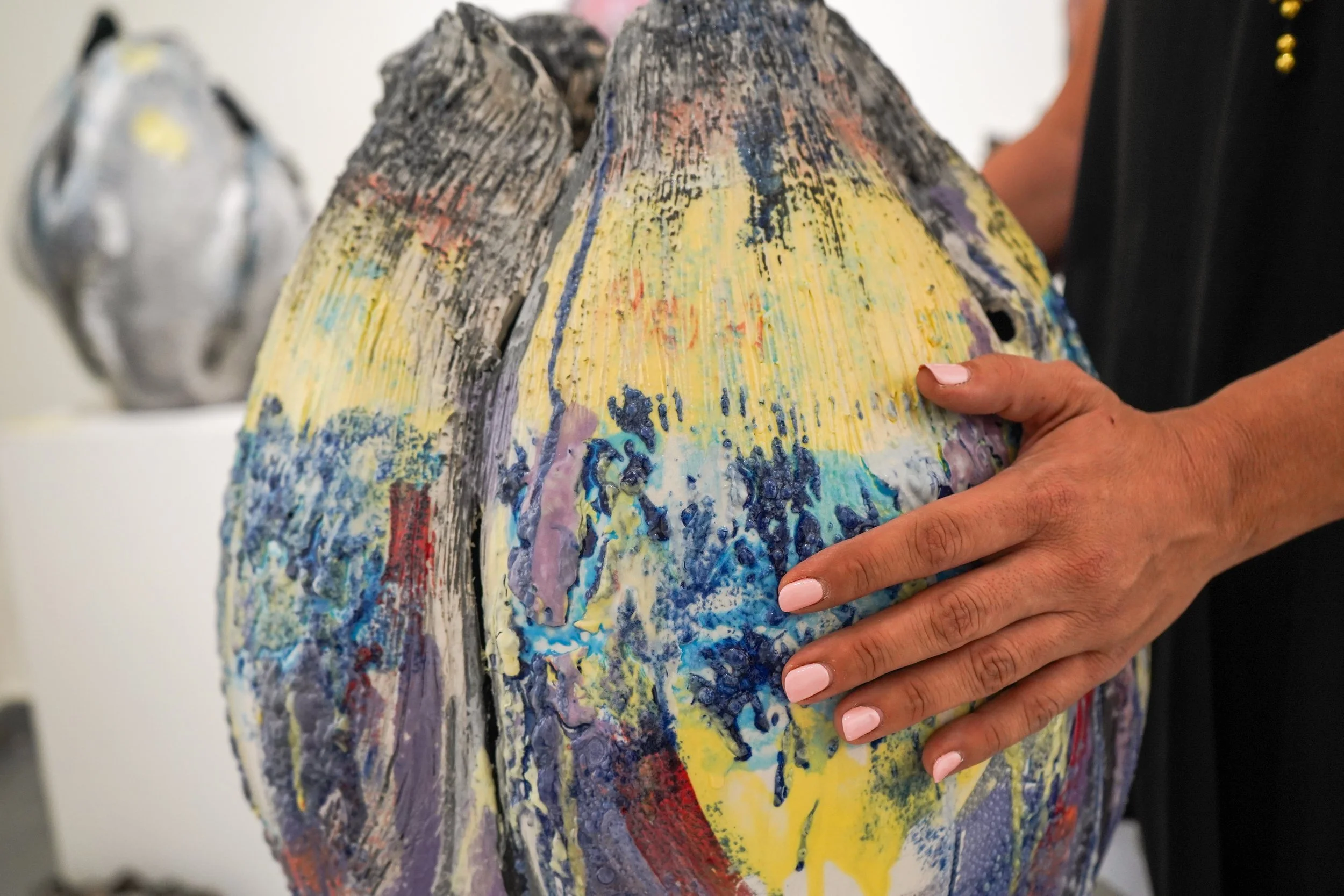
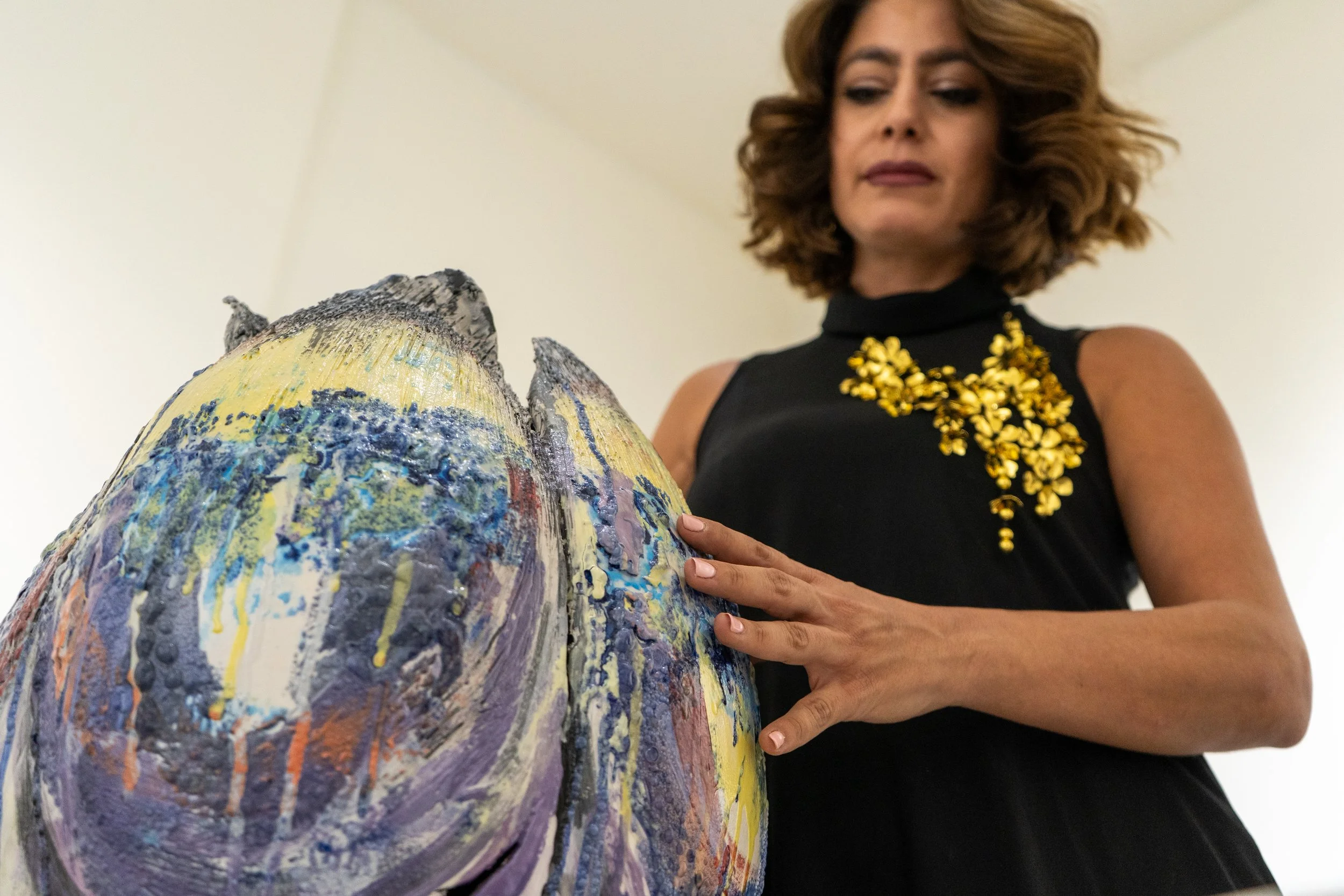
Nothing in the room feels like a simple object. Some pieces read like cross-sections of a wood log, showing the rough outer layer of the wood rather than the rings inside. Others open outward like tulips caught at different moments of bloom, each one folding or unfurling in its own shape. Colors shift from bold — blues, yellows, purples, reds — to dark and restrained.
You can see the hand in every piece. The scratches, cracks and layers make each one feel touched and lived-through, never quite finished — and that's where the beauty is. Memory, fragility, transformation: standing in front of the work, those words stop feeling abstract.
THE HAND BEHIND THE WORK
Photographing Khuzama with her sculptures made the connection between artist and material impossible to miss. You could almost trace the process in the clay itself — shaped, pressed, scraped, reworked. It's not just an object she made; it's a record of her hands.
WHAT I LEFT WITH
I came to document. I left thinking less about the shot and more about what the work was saying — and about my own path into documentary and personal photography. A thought followed me out the door: one day, I want a solo exhibition of my own. Not to make work like hers, but because she reminded me how powerful it is to give something personal a physical form.
Clay starts shapeless. Given time and touch, it becomes something we can see. Maybe memory works the same way — carried inside us until it finally finds its form. For Khuzama, that form is clay. For me, it may one day be photography.
I didn't just cover a story before an opening. I watched someone give memory a shape.
